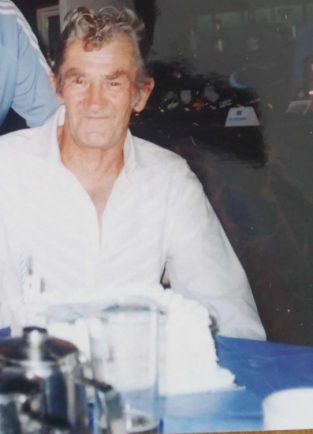
A WIDOW who saw her husband lose his painful battle with a respiratory disease has appealed for other ex-workers from the Coventry Homefire fuel works to come forward.
Janice Savage, 74, from Keresley End, watched her husband suffer after spending his 15-year career in what she described as dangerous working conditions.
She is part of a group of more than 50 trying to hold the former National Coal Board accountable for “unsafe practices” at the mine which opened in 1965.
She says working conditions caused his ill health and eventually led to his death in 2009.
They are being represented by Hugh James law firm which is calling on victims and their families to get in touch.
Janice’s husband, John Kazik Savage, started work at Coventry Homefire in 1974.
The plant, which closed its doors in 2000, produced smokeless fuel briquettes from char at its Keresley works.
Janice says that in the press hall where John worked, hot char was passed down from carbonisers and pressed into six-sided briquettes producing large quantities of dust and smoke to which workers were exposed.
She said: “Whilst working at the plant, John started to suffer from chronic bronchitis and developed severe chronic obstructive pulmonary disease (COPD).
“It was very distressing for us to see my husband’s health decline so rapidly, and I became John’s full-time caregiver until he passed away in 2009 after several hospital admissions.
“We had seven children together, so it was heart-breaking that this once fit and healthy man was cruelly taken away from us.”
The law firm says at its height of operation, over 300 men would have been employed at Homefire – many of whom will now be in their 80s.
The firm believes many will have died due to illnesses such as chronic obstructive pulmonary disease (also known as COPD or emphysema), chronic obstructive airways disease (COAD), chronic bronchitis, asthma, lung cancer and skin cancer.
Chairman of the union at the plant, James Gilmour, moved from Scotland for work in 1969.
The 78-year-old from Bedworth said: “Sometimes the dust was so thick you couldn’t see in front of you and it often reached 100 degrees in the press hall.
“It was a difficult working environment and a complex job and we weren’t protected properly.
“We weren’t given any protective masks until the 70s.”
James Gibson, partner at Hugh James leading the case, said: “We want to help these families see justice and we’re encouraging anyone to get in touch with their experiences of working at the plant.”
Anyone with information can contact the industrial disease team at Hugh James on 0808 278 0069 for a confidential chat.
We have contacted the government’s department of business, energy and industrial strategy for a response.