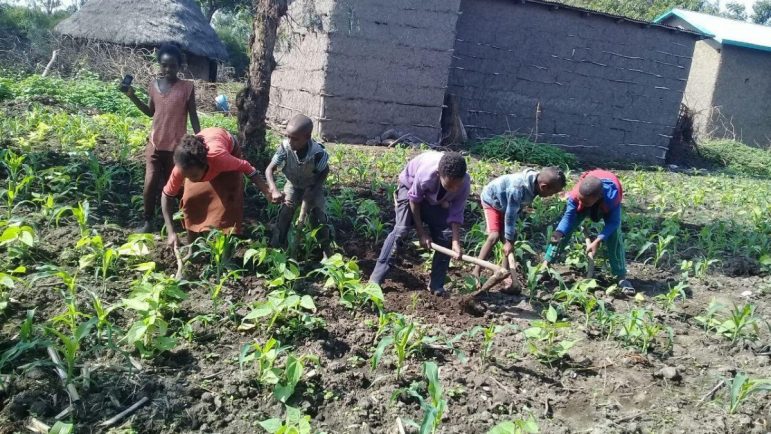
COVENTRY-based international children’s charity Global Care has launched a £45,000 Christmas appeal to help children in three Ethiopian villages remain or get back into school.
In Koshe, one of the most disadvantaged districts in Ethiopia, children start school late and drop out quickly – instead of learning skills in the classroom, they go straight to work in the fields, the home, or on the streets to help support their families.
Through its Empowerment for Education campaign, Global Care hopes to reduce school drop-out rates through launching a new four-year programme working with mums, helping them to create better futures for their families.
It says it wants to challenge the family culture which fails to recognise the value of education, and give mums an alternative source of income so they do not have to rely on child labour.
Global Care’s CEO John White said: “Children and education have always been at the heart of Global Care’s DNA, and we know that the reasons why children fail to access education are often more complex than simply building new classrooms, or supplying textbooks.
“In Koshe we need to challenge the culture which fails to value education and give parents a viable alternative source of income. All the evidence shows that resources earned by mothers will be spent on their children’s needs, whereas fathers are sometimes less reliable in their focus on the family. The evidence also shows that self-help groups can be a very successful catalyst for change.
“Empowering women in this way has the potential to bring significant change for hundreds of children, who otherwise will simply live out the same lives of grinding poverty, fear, uncertainty and hard labour as their parents. Can you help us offer the women and children of Koshe something better?”
All online donations during the week of December 1 – 8, will be doubled in value at no extra cost, thanks to match funding available through the Big Give Christmas Challenge.
Donations can be made at globalcare.org/christmas-2020
TWO CASE STUDIES:
MATI
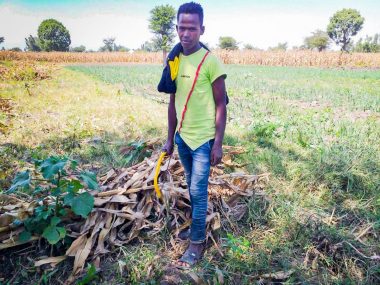
Mati
MATI dropped out of education in the last year of primary school due to his family’s financial problems. He earns a living by labouring for landowners, and receives between four and ten per cent of the money from crops sold. But if the crops fail for any reason, he won’t be paid. So the future is always uncertain.
In his family of six, only one sibling, his younger brother, attends school.
“I am not happy with my educational status,” says Mati “I wish I could have continued.”
LEILA
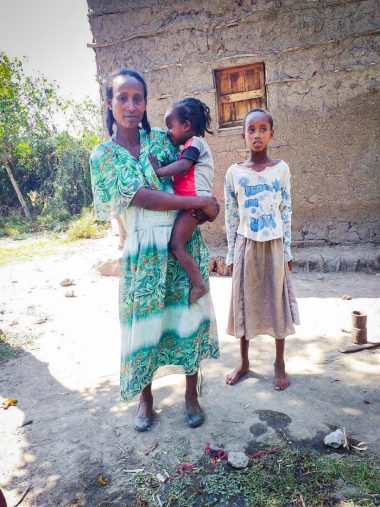
MUM-OF-EIGHT Leila has only four children attending school.
Her oldest son dropped out before he finished primary school because the family needed money.
Leila never went to school herself, and says she does not mind. The family live from day-to-day, dependent on whatever they can grow or the chickens they rear.
The children’s income from casual labour, and their help in the fields, feels more important than learning. “I would like to learn skills to start a business,” she says.