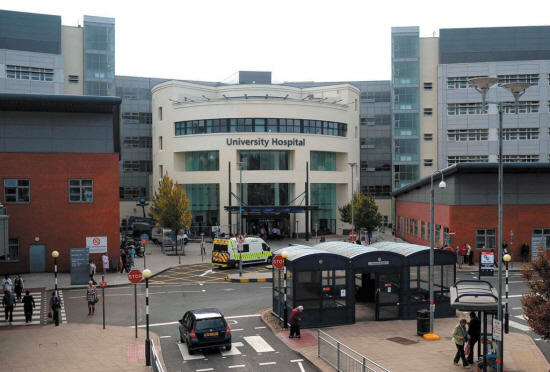
COVENTRY’S University Hospital will lead innovation in new technology it hopes will boost cancer detection and reduce diagnosis waiting times.
A £14million government grant to advance the use of artificial intelligence (AI) in the fight against the disease has been announced today (Tuesday, November 6).
University Hospitals Coventry and Warwickshire NHS Trust says it could bring to an end the misery of ‘limbo’ felt by thousands of people waiting for a cancer diagnosis.
The trust says the technology could speed up accurate detection of some cancers, as well as paving the way for more personalised care.
The project will focus on breast, prostate, lung and colon cancers.
AI technology allows tissue cell samples to be scanned and analysed, with data then stored to train computers to identify cancers more easily.
Coventry breast cancer patient Harriet who was diagnosed just before Christmas has welcomed the news.
She said: “I had an additional six core biopsies before Christmas because the first six were unclear.
“Waiting on the results felt like I was in limbo, it was an incredibly anxious time because I just wanted to know what I was facing so I could mentally prepare myself.
“The funding is fantastic news and will make the world of difference to people like me.”
Business Secretary Greg Clark confirmed that UK Research and Innovation will invest the substantial grant into a consortium led by the trust.
The consortium ‘PathLAKE’ is a partnership between University of Warwick and technology firm Philips who will collaborate on a three-year project, involving experts from across the NHS.
The new Centre for Artificial Intelligence (AI) will be based at University Hospital in Walsgrave where digital pathology was first used to diagnose cancer.
Consultant Histopathologist and clinical lead professor David Snead said: “Artificial intelligence used to be a thing of the future but I am delighted it is now set to transform how we do some pathology tests.
“It will mean that results will be quicker, more accurate and more sensitive than ever before, leading to improved patient care.
“This is an incredibly exciting time for the future of cancer diagnosis.”
The project will be hosted by the new UHCW Institute of Precision Diagnostics and Translational Medicine to ensure rapid translation into clinical practice.
Chief executive of the trust Andrew Hardy said: “This announcement is incredible news for patients and is testament to the hard work and dedication of our pathology team and their partners.
“Working through the new UHCW Institute of Precision Diagnostics and Translational medicine this allows UHCW to lead the way in translating new technologies to clinical practice which will be truly world-class.”