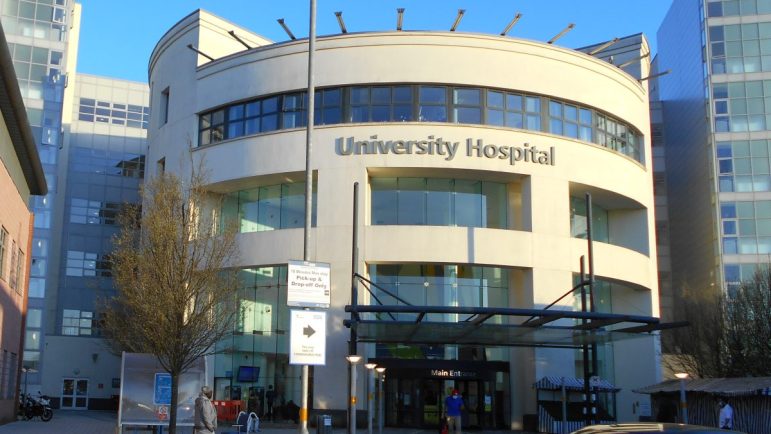
CLAIMS that cancer patients were allegedly given unnecessary chemotherapy treatments at University Hospital Coventry are under investigation.
Lawyers are representing 20 patients who have come forward after hospital bosses admitted one man was needlessly treated for more than 14 years.
They claim they have suffered debilitating effects due to alleged unnecessarily prolonged treatments of chemotherapy drug temozolomide (TMZ) from the early 2000s until 2023.
Guidelines from the National Institute for Health and Care Excellence recommend the drug should not be used for more than six months – although this is ‘at the discretion of health professionals’.
The claimants came forward after the initial patient, who was originally treated for a glioblastoma – an aggressive form of brain tumour – claimed he had suffered fatigue, joint pain, gastrointestinal distress, recurrent mouth ulcers and nausea because of the treatment.
His prolonged chemotherapy programme was only discovered after the oncology consultant treating him retired in late 2023, and the consultant who took over confirmed the four-week cycles of chemotherapy he was receiving were not needed.
University Hospitals Coventry and Warwickshire NHS Trust has commissioned the Royal College of Physicians (RCP) to conduct an independent review.
Law firm Brabners, which is representing the patients, has referred the matter to the Care Quality Commission (CQC) which is investigating the allegations.
It has also referred former oncology consultant Professor Ian Brown – who retired from the Trust in 2023 – to the General Medical Council.
Paralegal Becky Addison from Brabners said she believed there could be many more than 20 patients affected.
She said: “This is likely to be the tip of the iceberg with many more lives impacted. It’s very difficult to put a number on this.
“Each monthly cycle of treatment costs around £1,000. It is taxpayers’ money. If people have been receiving this treatment unnecessarily, that’s at a huge cost.
“We’re trying to get answers, accountability and compensation for these people.”
A spokesperson for the Trust said all treatment options for glioblastoma – for which only two percent of patients survive longer than 10 years – could carry the risk of complications.
They added the RCP review would assess treatment given to patients who had received more than 12 cycles of TMZ between 2017 and 2023, and said it was hoped the review would be completed by end of this year.
They said: “The Trust is committed to providing the best and safest possible care.
“We have comprehensively reviewed and spoken to all patients who were receiving TMZ treatment at the end of 2023 to ensure appropriate support and care plans are in place.
“As there is an ongoing review process, it would be inappropriate for us to comment further.”
Brabners is hosting a drop-in session for potentially affected patients and their families at Coventry and North Warwickshire Sports Club at 1pm to 4pm on Sunday April 13.