From skincare routines to hair transplants, men nationwide are stepping into a new era of self-care, without shame or flash.
Male grooming in the UK has transcended its traditional association with shaving and fragrances to become a diversified self-care ecosystem.
In 2023, the UK men’s grooming market was valued at USD 10.37 billion and is forecast to expand at a 9.5 % CAGR through 2030, driven by rising disposable incomes, the mainstreaming of skincare routines, and the influence of social media and influencer culture.
Within this market, skincare remains the single largest revenue segment, while hair-styling products are registering the fastest growth, reflecting a broader shift toward holistic grooming regimens that cover everything from anti-ageing serums to beard oils.
Concurrently, aesthetic medicine has opened new frontiers in male grooming: the British College of Aesthetic Medicine reports a 70 % surge in men’s cosmetic procedures since 2021, underscoring how treatments once seen as niche “tweakments” are now part of routine self-care.
“Men face more visibility than ever—Zoom meetings, conferences, social media—and they want to feel anchored, not anxious,” says Dr. Roshan Vara, co-founder and lead surgeon at Treatment Rooms London, a leading Hair replacement surgery clinic in London.
Popular non-surgical interventions include Botox and dermal fillers for subtle contouring; laser-based therapies like Ultherapy and Morpheus8 for skin tightening; and non-surgical rhinoplasty using injectable fillers. Meanwhile, surgical options—most notably hair restoration- have seen parallel demand, as men seek lasting solutions to thinning hair and pattern baldness.
This evolution reflects deeper cultural changes: the “Zoom Boom” of remote work made men more conscious of their on-screen appearance, while celebrity endorsements and the declining stigma around male cosmetic care have accelerated acceptance. Today’s UK male consumer isn’t just buying shaving cream—he’s investing across skincare, fitness supplements, and even surgical procedures, creating a multi-billion-pound market that shows no signs of slowing.
3. Why Hair Restoration Is Rising in Popularity
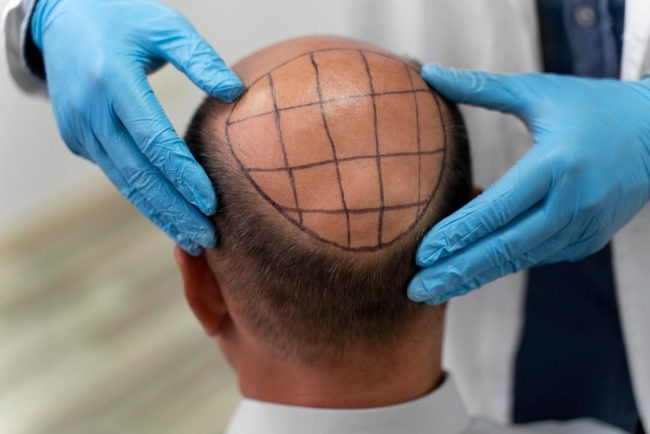
Hair transplants have become a discreet, effective investment in self‑image. No longer confined to the fringes of aesthetic clinics, they’ve evolved into mainstream confidence tools. Research indicates that around two‑thirds of men experience noticeable hair thinning by their mid‑thirties, with approximately 85% affected by age 50. This widespread prevalence makes taking proactive steps feel natural rather than indulgent.
FUE (Follicular Unit Extraction) is widely recognised as the gold standard technique. It is minimally invasive, leaves no visible linear scarring, and is tailored for professionals who need to maintain their routine.
Most clients are back at work—or on Zoom calls—within just a few days. More importantly, outcomes are consistently natural-looking, with a graft success rate hovering between 85–95%. Beyond aesthetics, men who undergo FUE often report boosts in self-confidence, improved social engagement, and a stronger sense of professional presence.
Broader UK trends are clear. In 2023, the UK hair transplant market was valued at approximately £101 million, with projections showing growth to £335 million by 2030. On a global scale, the hair transplant industry hit US$8.01 billion in 2024, with an expected rise to $15.65 billion by 2035.
UK men are now investing more in cosmetic procedures than ever before, driven by high-resolution media, social platforms, and celebrity trends American Hair Loss Association. In this light, hair transplants are no longer viewed as extremes—they’re strategic enhancements for individuals who value their image and wellbeing in a polished, yet discreet way.
What Hair Transplants Mean for Men
A restored hairline isn’t just about aesthetics—it shapes how you feel and how others perceive you. Men with fuller hair often report feeling more assertive in high-pressure situations, whether that’s closing a deal in the boardroom or making a strong first impression at networking events. By eliminating the visible signs of thinning or recession, hair restoration can help you project confidence, so you’re judged on your ideas and abilities rather than your appearance.
A successful hair transplant is as much art as it is science. Expert surgeons meticulously harvest follicular units from donor areas—usually the back and sides of the scalp—then implant each graft according to your unique hairline pattern. They consider factors like your age, facial structure, and personal style goals, ensuring the new hair flows in the same direction and density as your natural growth. The result is a seamless hairline that complements your features and ages with you over time.
Unlike topical treatments, sprays, or concealers that wash or wear off, transplanted follicles become a lasting part of your scalp. Because the donor hair is genetically resistant to the hormones that cause male pattern baldness, you won’t need to worry about wind blowing away fibres or sudden rain revealing scalp patches. Over the years, as your surrounding hair continues its natural life cycle, the transplanted strands maintain their strength, giving you a worry-free solution to hair loss that endures as your most reliable style asset.
Final Takeaway
Today’s modern man invests in high-end serums, precision-engineered grooming tools, and even hair restoration procedures to present the best version of himself at work, in social settings, and online. Hair transplant for women in the UK is also increasing as more people continue to invest in their self-confidence and personal image.
If hair loss has ever caught your attention—whether you’ve noticed thinning on video calls, felt uneasy under bright lights, or simply worried about your image, consider that addressing it can be both a personal and strategic decision.
Consulting a qualified hair transplant surgeon isn’t just about restoring follicles; it’s about taking control of your appearance and, by extension, your professional presence and self-esteem. In an era where first impressions matter more than ever across LinkedIn profiles, Zoom meetings, or in-person pitches, proactively exploring your hair restoration options can be as much a career investment as it is a confidence booster.
By Lisa Thomas.