With the ability to revolutionize various sectors and bring decentralization and transparency, blockchain technology entered to dominate this and much more in the digital age. For this reason, it is important to know what blockchain-based services are.
A blockchain report has shown that Latin America has welcomed this technology. Whether due to the distrust of current power or the ease of access to technology for everyone – regardless of income or social position. The truth is that cryptocurrency ecosystems have grown in the 21 countries that make up Latin America.
But without further ado, it’s time to find out what this technology is and the power it holds.
What is blockchain technology?
Blockchain, literally translated, is the union of the words block+chain. But what does it mean?
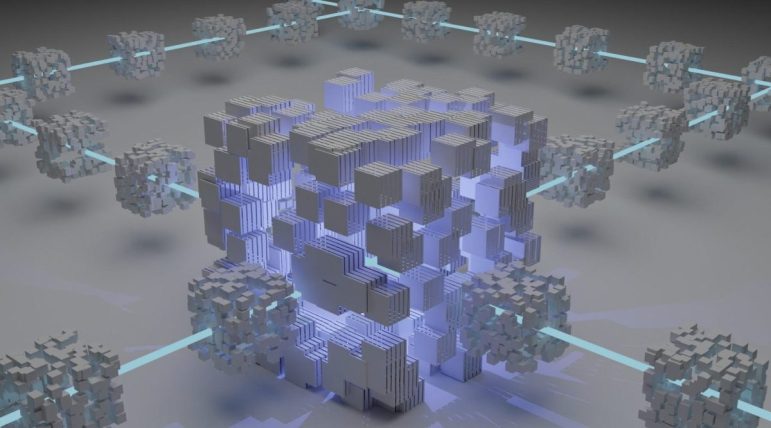
All information on virtual currency transactions in batches (blocks) is periodically stored in it. Each of them has a fingerprint, a unique mathematical code called a hash. These blocks are linked together in chronological order and form a continuous line (a chain) of blocks: the blockchain.
Blockchain brought together technology and accounting. Through a chain of blocks, this record is made in a reliable and immutable way. With a sophisticated level of authentication and security, added to the ease of implementation in other scenarios, blockchain is a promising alternative.
Key principles of blockchain technology include:
- Decentralization
- Transparency
- Immutability
Decentralization
Blockchain does not operate like traditional systems. This technology operates on a decentralized network of computers, called nodes.
Each node carries a copy of the entire blockchain with it. And the best part is that what validates everything is a consensus mechanism agreed upon between the network participants themselves.
Example: Bitcoin (cryptocurrency)
Bitcoin is a good example of blockchain decentralization. It operates on a decentralized network of nodes where transactions are verified through a process called mining.
How does it work? In a kind of competition, so-called “miners” compete to solve complex mathematical puzzles, and the first one to solve them adds a new block of transactions to the blockchain. This decentralized consensus mechanism eliminates the need for a central authority to validate transactions.
Transparency
All participants in the network can view transactions on a blockchain. This increases trust since it is very easy to audit and verify the veracity of a transaction.
Example: Supply Chain Management
Logistics also benefit from blockchain. In sectors such as food and luxury goods, blockchain is used to track the journey of products from origin to consumer.
Each step of the supply chain is recorded as a transaction on the blockchain, providing a transparent and – best of all – unforgeable record of product history. Accessing this information is simple. Consumers can scan a QR code to verify the authenticity and ethical origin of the product, for example.
Immutability
Here is another aspect that boosts confidence in this technology. Once you enter a transaction into the blockchain, it cannot be changed or deleted. This immutability is achieved through cryptographic hashing and consensus mechanisms, ensuring data integrity.
Example: Land Title Registration
No, you did not read it wrong. Today there is the use of blockchain in the registration of land titles. This helps a lot, as traditionally land title registrations are susceptible to fraud and disputes.
With blockchain, property titles can be recorded as transactions on a blockchain. Once registered, these records cannot be altered or tampered with, ensuring a reliable and immutable record of land ownership.
Blockchain origin
The concept of blockchain dates back to 1991, with scientists Stuart Haber and W. Scott Stornetta – the creators of blockchain. At the time, they introduced a cryptographically secure blockchain to timestamp digital documents and prevent backdating.
But the term grew in 2008. Satoshi Nakamoto (pseudonym) published the Bitcoin white paper and then everything changed. In the text, he showed in practice the first implementation of blockchain technology. Today, Bitcoin is very well known, but at the time it wasn’t quite like that.
The idea of creating a decentralized and unbanked digital currency that would work without institutional intermediaries was somewhat innovative.
What are blockchain-based services (BaaS)?
Blockchain-based services (BaaS) involve third-party installation and maintenance of blockchain networks for a company’s technologies. With BaaS, a company can build and use its blockchain applications and services.
With the advancement of the software, fintech and logistics sectors, BaaS has gained so much popularity that some of the biggest technology giants around the world – such as IBM, Microsoft and Oracle – have adopted sectors specializing in incorporating and promoting blockchain as a service.
Many companies have taken the lead and are combining cloud services with blockchain as a service. This flexibility of BaaS brings intelligent solutions to the company’s problematic points.
And that goes for many business sectors. Whether acting as a smart contract platform for a law firm or a payment processing service for an advertising agency, blockchain as a service is already successful.
So now you know what blockchain-based services are. Use the power of this information in your company’s favor and welcome to 2023!